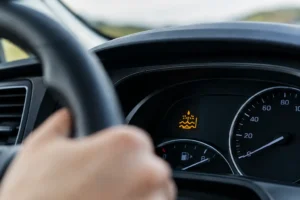
A diesel that suddenly displays an engine management light, AdBlue warning or reduced-power message can leave you asking: what does NOx sensor do? It is a small sensor with a big role. When it reports incorrect readings – or stops communicating with the engine ECU – the vehicle may limit performance, increase AdBlue use or, on some models, begin a no-start countdown.
For many modern diesel cars and vans, especially Euro 6 models, the NOx sensor is central to keeping the emissions system working properly. It is also commonly blamed when the real fault lies elsewhere. That is why a proper diagnosis matters before anyone starts fitting expensive parts.
What does a NOx sensor do?
A NOx sensor measures nitrogen oxides in the exhaust gas. Nitrogen oxides, usually shortened to NOx, are harmful pollutants created during combustion. Diesel engines are efficient and economical, but they can produce higher levels of NOx than petrol engines, particularly under load.
The sensor sends live information to the engine ECU. The ECU uses that information to control the Selective Catalytic Reduction, or SCR, system. This is the part of the exhaust system that injects AdBlue into the exhaust stream. Once heated, the AdBlue helps the SCR catalyst convert NOx gases into harmless nitrogen and water vapour.
Most SCR-equipped diesels have at least one NOx sensor after the SCR catalyst. Many have two: one before the catalyst and one after it. The first tells the ECU how much NOx is entering the system. The second helps it check whether the catalyst and AdBlue dosing system are actually reducing emissions as they should.
Put simply, the NOx sensor gives the ECU the feedback it needs to dose AdBlue accurately and monitor whether the SCR system is doing its job.
Why a faulty NOx sensor causes bigger warnings
A NOx sensor does not just switch a warning light on or off. Its reading affects how the vehicle manages emissions. If the ECU receives a reading that is implausible, too high, too low or missing altogether, it cannot reliably control the SCR system.
The response varies between manufacturers. A BMW, Mercedes-Benz, Volkswagen Group vehicle, Peugeot, Citroën, Ford or Land Rover diesel may all display slightly different messages, but the pattern is familiar. You may see an engine management light, an emissions fault warning, an AdBlue range warning or a message stating that the engine will not restart after a certain mileage.
The no-start countdown catches many drivers out. The engine may still run normally at first, so it is tempting to keep using the vehicle until the warning becomes urgent. However, once the countdown reaches zero, some vehicles will prevent restarting until the underlying SCR or AdBlue fault has been repaired and the system has accepted the repair.
A failed NOx sensor can also lead to reduced power, poor fuel economy or excessive AdBlue consumption. These symptoms are not guaranteed, though. On some vehicles, the only obvious sign is a warning message.
How the sensor works in real conditions
A NOx sensor is more sophisticated than a basic temperature or pressure sensor. It contains an electronic control unit built into the sensor assembly, plus a probe that sits in the exhaust. It needs to operate at very high temperatures and communicate accurately with the vehicle’s ECU.
This explains why they can be expensive and why they fail more often than owners expect. They live underneath the vehicle in an environment of heat cycles, water spray, road salt, vibration and contaminated exhaust gases. The sensor’s wiring and connector are also exposed to damage.
The ECU compares NOx readings with engine load, exhaust temperature, AdBlue pressure, injector operation and catalyst performance. If one figure does not make sense, it stores a fault code. The code is a starting point, not a complete diagnosis.
Common symptoms of a failing NOx sensor
A NOx sensor fault can look very similar to other diesel emissions problems. Common signs include:
- Engine management light or emissions warning message
- AdBlue warning despite the tank being full
- A countdown warning saying the engine will not restart after a set distance
- Reduced engine power or limp mode
- Increased AdBlue consumption
- Stored SCR efficiency, NOx sensor communication or heater circuit fault codes
A warning is not proof that the sensor itself has failed. For example, a vehicle may log a downstream NOx reading that appears too high because the SCR catalyst is not converting emissions effectively. The sensor may be correctly reporting a genuine SCR problem.
What causes NOx sensor faults?
Age and heat exposure are common causes, particularly on vehicles used for frequent short runs or high-mileage motorway work. Internal electronics can fail, and the sensor heater circuit can develop a fault. Water ingress, damaged wiring and corroded connectors are also regularly found during inspections.
Exhaust leaks are another possible cause. A leak near the sensor or SCR catalyst can allow outside air into the exhaust stream and distort readings. Likewise, contamination from oil, coolant or poor combustion can affect the sensor and catalyst over time.
AdBlue system faults can create misleading NOx-related codes too. A weak pump, blocked injector, crystallised AdBlue, poor-quality fluid, wiring issue or low system pressure can stop the correct amount of AdBlue reaching the catalyst. The downstream NOx sensor then detects poor conversion, and the ECU may flag SCR performance or NOx plausibility faults.
The same applies to an ageing SCR catalyst. On a high-mileage diesel, the catalyst may no longer store and convert NOx efficiently. Fitting a new sensor without checking catalyst efficiency and AdBlue dosing can turn into an expensive guess.
Fault codes linked to NOx sensors
Generic diagnostic codes often begin with P22 or P20. Examples include P2200, P2201, P2202 and P2203, which can relate to NOx sensor circuit or range and performance issues. Codes such as P229F or P2BA9 may point to NOx performance and excessive emissions after the SCR catalyst.
The exact code description depends on the manufacturer and diagnostic equipment. Manufacturer-specific codes can provide much better detail, including whether the fault is on sensor 1 or sensor 2, whether the issue is a heater circuit, communication fault or implausible reading, and whether it is currently active or stored from an earlier event.
Clearing the code may turn the light off briefly, but it does not repair the cause. If the fault remains, the ECU will normally run its checks again and bring the warning back. With an AdBlue countdown, clearing codes alone may not cancel the restart restriction either.
Diagnosing the fault properly before replacing parts
A sound diagnosis starts with a full scan of all relevant control units, not just a quick universal code reader check. The ECU fault memory, freeze-frame information and live data help show when the fault occurred and what the system was doing at the time.
A specialist should then compare upstream and downstream NOx values where fitted, check exhaust temperatures, review AdBlue pressure and dosing data, and inspect the sensor wiring, plugs and exhaust for damage or leaks. On some vehicles, an SCR efficiency test or controlled AdBlue dosing test is needed to separate a sensor fault from a catalyst or injector problem.
There are occasions where replacement is straightforward. A sensor with a clear internal heater failure, communication fault or damaged wiring will often be the answer. Even then, the vehicle may need coding, adaptation or a drive cycle before the ECU confirms that the repair has worked.
It depends on the make and model. Some systems are particularly sensitive to genuine part quality and correct software calibration. Cheap pattern sensors can produce inaccurate readings, fail early or refuse to initialise correctly. Saving money on the part can cost more if the warning returns and the diagnosis has to start again.
Can you drive with a NOx sensor fault?
If the vehicle is driving normally, it may be possible to continue for a short time, but it is not a fault to ignore. You could be heading towards reduced power or a no-start countdown, particularly if an AdBlue or SCR warning is already present. Continuing to drive with an underlying dosing problem can also place extra strain on the SCR catalyst.
If the warning says there is a limited distance before no restart, arrange diagnosis promptly rather than waiting for the final few miles. A van that will not restart outside a job, or a family car that cannot be started on the drive, is far more disruptive than dealing with the fault while the vehicle is still mobile.
For drivers in Greater Manchester, Tech Tuning Northwest can diagnose diesel emissions, AdBlue, SCR and NOx sensor faults at your home or workplace. The aim should always be to identify whether the sensor is genuinely at fault, or whether it is reporting a separate issue elsewhere in the system.
A NOx warning is usually the vehicle asking for accurate diagnosis, not a random sensor replacement. Acting on the right evidence can protect your time, your budget and your ability to start the vehicle tomorrow.