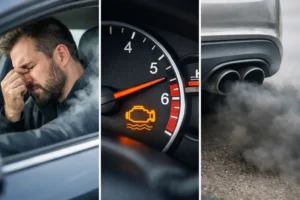
A diesel warning light is rarely the problem itself. It is the vehicle telling you that one system has seen a reading it does not like, and mobile diesel diagnostics Manchester drivers can use should identify the cause before anyone starts replacing expensive parts. That matters whether your van is needed for work tomorrow, your car is stuck in reduced power, or an AdBlue countdown is getting uncomfortably close to zero.
Proper diagnostics are not simply plugging in a code reader, clearing the fault and hoping it stays away. Modern diesel engines rely on several systems working together: the DPF traps soot, the EGR system controls exhaust gas flow, and the SCR/AdBlue system reduces NOx emissions. A fault in one area can trigger warnings in another. The useful question is not just, “What code is stored?” but, “Why did the ECU set it?”
What mobile diesel diagnostics in Manchester should involve
A proper diagnostic visit starts with the vehicle’s fault memory, but it should not end there. The stored codes provide a direction. Live data, freeze-frame information and the vehicle’s current operating values tell a much fuller story.
For example, a DPF-related code may be caused by a genuinely blocked filter, but it can also appear because a pressure sensor is reading incorrectly, an exhaust temperature sensor has failed, an EGR fault is creating excess soot, or the engine has not been able to complete a regeneration. Replacing the DPF without checking those basics can be an expensive mistake.
The same applies to AdBlue warnings. On many Euro 6 diesel cars and vans, including common BMW, Mercedes-Benz, Audi, Volkswagen, Peugeot, Citroen, Vauxhall, Ford and Jaguar Land Rover models, the message on the dashboard is often vague. “AdBlue fault”, “emissions fault” or “no engine start in 650 miles” does not identify the failed part. It may relate to a NOx sensor, heater circuit, injector, tank pump, quality reading, wiring issue, crystallisation or an ECU plausibility fault.
A mobile specialist can carry out much of this investigation at your home, workplace or vehicle location. This avoids booking the vehicle into a general garage simply to find out what is wrong, then losing more time while parts are guessed at or ordered.
Warning lights and symptoms worth taking seriously
Some faults arrive without a dramatic change in how the vehicle drives. That does not make them harmless. An amber engine management light may be the first warning of a sensor issue that will later prevent a DPF regeneration or bring up an AdBlue no-start countdown.
Other faults are more obvious. Reduced power, poor throttle response, frequent cooling-fan operation after a journey, increased fuel use and a strong exhaust smell can all point towards an emissions-system problem. A DPF warning light, particularly if it returns after a motorway run, needs investigating rather than repeatedly attempting a forced regeneration.
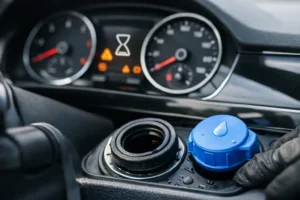
With SCR systems, the most urgent message is usually the start-inhibition countdown. Once the count reaches zero, many vehicles will crank but will not start, even if the engine itself is mechanically sound. Topping up the AdBlue tank may be appropriate when the level is low, but it will not fix a stored system fault or reset a countdown caused by a failed component.
Why the same fault code can mean different repairs
Fault codes are descriptions of what the ECU has detected, not a guaranteed parts list. A NOx sensor code might mean the sensor has failed internally, but a technician should also consider damaged wiring, a poor connector, water ingress, exhaust leaks and values that do not make sense alongside other sensor readings.
Likewise, a code for low DPF efficiency does not automatically mean the filter needs replacing. The soot load, calculated ash load, differential pressure readings and exhaust temperatures all need to be considered. A vehicle that only covers short runs may have a serviceable DPF that is overloaded with soot. A filter with high ash content, however, will not be restored by a normal regeneration and may need professional cleaning or replacement.
This is why cheap code clearing often creates a false sense of progress. The light may disappear for a few miles or days, but the ECU will set the code again when it sees the same underlying condition.
DPF faults: when a regeneration helps and when it does not
A DPF regeneration burns accumulated soot into a small amount of ash. For it to work, the engine must reach suitable temperatures and the ECU must see no fault that prevents regeneration. A failed temperature sensor, glow plug issue, fuel-system fault, EGR problem or unsuitable driving pattern can stop the process.
If the DPF light has appeared for the first time and the vehicle otherwise drives normally, a sustained run may allow an active regeneration to finish. That only applies if the handbook permits it and there are no other warnings or severe loss of power. It is not a cure for every DPF fault.
A forced regeneration is also not automatically the right answer. If the pressure reading is implausible or the filter is heavily loaded, forcing high exhaust temperatures through the system can be risky. The cause of the loading should be found first. In some cases, off-car DPF cleaning is the sensible option; in others, the fault lies elsewhere and the filter is not the main issue at all.
AdBlue, SCR and NOx sensor faults in plain English
AdBlue is a urea-based fluid injected into the exhaust, not into the engine. In the SCR catalyst, it helps convert harmful NOx gases into nitrogen and water. The ECU monitors this system closely because emissions rules require it to work.
The complication is that several parts must agree with each other. The tank must supply fluid, the injector must dose it correctly, heaters must operate in cold conditions, NOx sensors must report believable readings, and the SCR catalyst must perform as expected. If one value is outside its expected range, the ECU can log a fault and eventually impose a no-start condition.
Crystallised AdBlue around an injector or pipework is a common real-world issue. So are failed NOx sensors and tank module faults. On some vehicles, software updates or ECU calibration issues can also affect the diagnosis. The right repair depends on verified test results, not on replacing every component named in an online forum thread.
ECU faults and software checks
Not every engine-management issue is a mechanical failure. ECU software can affect how faults are detected, how regeneration is managed and whether a known manufacturer issue has a calibrated repair procedure. A specialist diagnostic process checks the vehicle’s software identification alongside its live readings and fault history.
That does not mean software is a shortcut around a physical fault. If a sensor has failed, wiring is damaged or a DPF is full of ash, the physical problem still needs dealing with. But where an ECU software issue is confirmed, a correct calibration solution can prevent repeated faults or unnecessary parts replacement.
What you can do before a diagnostic visit
Do not keep clearing the warning light, and avoid repeated short journeys if the vehicle is already in reduced power. Make a note of the exact dashboard message, whether the fault appeared after a refuel or AdBlue top-up, and whether the vehicle has recently had any repairs. Those details can save time.
If an AdBlue countdown is active, do not wait until the final few miles. If the engine will not start after the countdown expires, a mobile diagnosis is still possible in many cases, but resolving it is easier before the vehicle becomes immobilised. For a DPF warning, avoid attempting a long hard drive if there are multiple warning lights, severe power loss or unusual noises.
When mobile diagnosis is the right option
Mobile testing is particularly useful when the vehicle is drivable but unreliable, when a van cannot easily be taken off the road, or when a no-start countdown makes every journey a gamble. It also gives you a clear explanation before committing to a repair.
There are limits. A vehicle with a serious mechanical issue, damaged exhaust components, or a DPF requiring removal may need workshop facilities. Honest diagnostics means saying so rather than promising that every fault can be repaired on a driveway.
Tech Tuning Northwest provides specialist mobile diesel diagnostics across Greater Manchester for drivers dealing with DPF, AdBlue, SCR, NOx, EGR and ECU-related faults. The aim is to establish the actual cause, explain the sensible repair options and avoid the familiar cycle of parts being fitted without fixing the warning light.
When a diesel fault appears, the best next step is not to panic or buy the first part suggested by a code. Get the system tested while the symptoms and stored information are still present. A clear diagnosis gives you the best chance of keeping the repair proportionate, protecting the vehicle and getting back to using it with confidence.