A P0401 code can look like a straightforward instruction to replace the EGR valve. In reality, a proper P0401 diagnosis example often shows why that is an expensive assumption. The code means the ECU has detected insufficient exhaust gas recirculation flow, but it does not identify the part preventing that flow.
On a diesel car or van, that distinction matters. The EGR valve, intake pipework, cooler, vacuum controls, sensors and carbon build-up can all affect the result. Replacing the valve without testing the system may clear the warning light briefly, or it may make no difference at all.
What P0401 actually means
P0401 is a generic OBD fault code for EGR flow that is lower than the ECU expects. EGR stands for exhaust gas recirculation. Under certain engine operating conditions, the engine sends a controlled amount of exhaust gas back into the inlet system. This lowers combustion temperatures and helps reduce nitrogen oxide emissions.
The ECU commands EGR flow, then looks for a response. Depending on the vehicle, it may use readings from the mass air flow sensor, manifold pressure sensor, EGR position sensor, differential pressure sensor or a combination of these. If the expected change is not seen, P0401 can be stored.
That is why a fault code reader saying “EGR insufficient flow” is a starting point, not a diagnosis. A valve can move electrically but still be blocked by carbon. Equally, the valve may be fine while a faulty MAF sensor is reporting airflow incorrectly.
Common symptoms include an engine management light, reduced power, poor low-speed response, hesitation, rough running and worse fuel economy. Some vehicles will drive normally apart from the warning light, particularly in the early stages. Others may enter reduced-performance mode when the fault is repeatedly detected.
P0401 diagnosis example on a diesel van
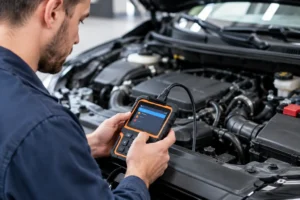
Consider a diesel van that arrives with an engine management light, a stored P0401 fault and occasional sluggish acceleration. The owner has already been advised that it needs an EGR valve. Before ordering one, the sensible approach is to establish whether the requested EGR flow is actually reaching the inlet.
The first check is a full diagnostic scan, not just a basic code read. Other stored or pending faults matter. A MAF sensor code, manifold pressure fault, DPF pressure issue or EGR position fault can change the direction of diagnosis. Freeze-frame data can also show when P0401 was logged, including engine temperature, speed, load and airflow readings.
Next, live data is checked with the engine fully warmed up. On many diesels, commanding the EGR valve open should reduce fresh-air flow measured by the MAF sensor because exhaust gas is displacing some of the incoming air. If the ECU commands the valve open and the MAF reading hardly changes, there may be a genuine lack of EGR flow.
In this example, the scan tool shows that the ECU is commanding the EGR valve to open. The valve position feedback broadly follows the command, but the MAF value does not react as it should. That rules out neither the valve nor the MAF sensor, but it points towards a flow restriction or an unreliable airflow reading.
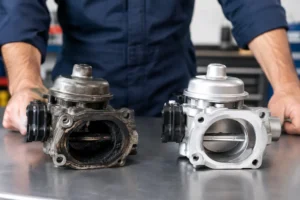
The EGR pipework is then inspected. On this van, the pipe leading from the EGR cooler to the inlet is heavily restricted with carbon deposits. The EGR valve has movement, yet very little gas can pass through the blocked passage. Replacing the valve alone would not have cured the P0401 code.
After removing the affected components, the carbon build-up is assessed properly. If the valve mechanism is free, the electrical readings are correct and the deposits can be removed without damaging the unit, cleaning may be the sensible repair. If the valve is sticking, its motor or position sensor is faulty, or the cooler is internally restricted beyond practical cleaning, replacement may be justified.
Once reassembled, the fault codes are cleared and live data is checked again. The airflow response now changes when EGR is commanded. A road test and a further scan confirm that P0401 does not return. That is a diagnosis-led repair, rather than fitting parts in hope.
Why P0401 happens
Carbon contamination is one of the most common causes, especially on diesels used for short journeys, stop-start driving or regular low-load running. Soot from the exhaust mixes with oily vapour in the intake system and gradually forms sticky deposits. Over time, passages in the EGR valve, cooler or inlet manifold can narrow significantly.
However, carbon is not the only answer. A P0401 fault can also result from a failed EGR valve actuator, a damaged vacuum hose on older vacuum-operated systems, a faulty EGR control solenoid, wiring damage or poor electrical connections. Vehicles with electronically controlled valves can suffer from internal position sensor faults even where the valve appears clean.
Airflow and pressure sensors deserve attention too. The ECU bases its decision on sensor information. A contaminated or failing MAF sensor may make healthy EGR flow look insufficient. Likewise, a manifold pressure sensor clogged with soot can report figures that do not match reality.
On some engines, an EGR cooler restriction is the real problem. On others, the inlet manifold is so carboned up that the system cannot distribute exhaust gas as designed. The exact layout differs across Volkswagen Group, Ford, BMW, Mercedes-Benz, Vauxhall, Peugeot, Citroën, Renault and other diesel vehicles, so diagnosis should follow test results rather than brand stereotypes.
Checks that separate a P0401 cause from a guess
A reliable diagnosis normally combines electronic testing with physical inspection. Reading codes alone is not enough, and neither is removing the EGR valve without checking the data that led the ECU to set P0401.
A technician should check for related fault codes, review freeze-frame information, compare requested and actual EGR operation, and assess MAF and manifold pressure readings. Where the diagnostic equipment supports it, an actuator test can command the valve while observing live changes. Electrical supply, earth and signal circuits may need testing where a control fault is suspected.
Physical checks are equally useful. This can include inspecting vacuum lines, connector pins, EGR pipes, cooler passages and the inlet tract. A split hose, seized flap or blocked port can be missed if the work is limited to a scan tool.
There is a trade-off with cleaning. Cleaning can be cost-effective when the component is mechanically sound and carbon is the confirmed issue. It is not a cure for a failed motor, worn gears, a faulty sensor or a cooler that has deteriorated internally. Cheap aerosol treatments may offer limited help with light contamination, but they do not remove severe deposits from a blocked EGR passage or inlet manifold.
Can you keep driving with P0401?
If the vehicle is driving normally, a short necessary journey may be possible, but leaving the fault unresolved is rarely wise. Continued carbon build-up can lead to more frequent warning lights, loss of performance and related DPF problems where the engine is no longer managing exhaust gases correctly.
If the vehicle has reduced power, poor running, excessive smoke or multiple emissions faults, avoid forcing it through heavy use. A working van used for daily jobs can quickly become more inconvenient and costly if an EGR restriction develops into wider intake or DPF contamination.
Clearing the code without repairing the cause is also unlikely to last. The ECU will run its checks again once the required operating conditions are met, and the warning light can return.
When specialist diagnostics save money
P0401 can be one of those faults where the first garage quote is for an EGR valve and the second quote is for another part after that fails to cure it. Proper live-data diagnosis takes more thought, but it helps avoid replacing good components.
For owners around Greater Manchester, Tech Tuning Northwest can assess diesel EGR and emissions faults at home or at a fixed workplace, where suitable. The goal is to identify whether the issue is the valve, the flow path, a sensor or the control system before recommending cleaning, repair or replacement.
A P0401 warning is best treated as evidence of a flow problem, not proof that one specific part has failed. Getting that distinction right is often what turns an uncertain repair into a lasting one.