An AdBlue non start reset is often searched when the dashboard says something like “Engine will not restart in 700 miles” or “No engine restart possible”. The frustrating part is that adding AdBlue does not always clear it. In many cases, the vehicle has detected a fault in the SCR emissions system and will keep the non-start countdown active until that fault is properly diagnosed and repaired.
For drivers who rely on a diesel car or van for work, this is not a warning to ignore. Once the countdown reaches zero, the engine may crank normally but refuse to start. A diagnostic reset can be part of the repair, but it is not a magic button that fixes a faulty AdBlue system.
What does an AdBlue non-start warning mean?
Modern diesel vehicles use Selective Catalytic Reduction, usually shortened to SCR, to reduce nitrogen oxide emissions from the exhaust. The system injects a measured amount of AdBlue fluid into the exhaust, where it helps convert harmful NOx gases into nitrogen and water vapour.
The engine ECU and SCR control unit monitor the whole process. They check the AdBlue level, fluid quality, tank temperature, heater operation, pump pressure, injector performance and readings from the NOx sensors. If the system cannot confirm that emissions are being controlled correctly, it can trigger an engine management light, an AdBlue warning and eventually a no-start countdown.
This is why a vehicle can have a full AdBlue tank and still display a non-start message. The warning is often about the system’s ability to deliver and monitor AdBlue, not simply the amount of fluid in the tank.
Why topping up AdBlue may not reset the countdown
If the warning was genuinely caused by a low fluid level, adding the correct amount of fresh AdBlue may allow the vehicle to recognise the refill after a short drive cycle. Some vehicles need at least several litres added before the level sensor registers a change. Switching the ignition on and off a few times can also help the system re-check the level.
However, a countdown that remains after a proper top-up usually points to a stored fault code. The vehicle may have logged an issue with AdBlue pressure, tank electronics, a heater circuit, a dosing injector or a NOx sensor. On some makes, the ECU will not remove the non-start condition until the fault has been corrected and the relevant reset procedure is completed with suitable diagnostic equipment.
Clearing fault codes without repairing the cause rarely works for long. The warning may disappear briefly, then return as soon as the system runs its next self-test. Worse still, repeatedly clearing codes can make diagnosis more difficult by removing useful fault information.
Common faults behind AdBlue non-start problems
The exact failure varies between manufacturers and engine types, but the same faults appear regularly across European diesel cars and vans.
AdBlue tank, pump and heater faults
Many AdBlue tanks contain more than just fluid. They can include a pump, heater, level sensor, temperature sensor and control electronics. If one part fails, manufacturers often quote for replacing the complete tank assembly, which can be expensive.
Crystallised AdBlue is another common issue. AdBlue can form white crystals around pipe connections, injectors and tank components, particularly where there has been a small leak or the vehicle has made repeated short journeys. These deposits can restrict flow or affect pressure readings.
Faulty NOx sensors
NOx sensors measure exhaust gas before and after the SCR catalyst. Their readings tell the ECU whether the system is reducing emissions as expected. A failed or inaccurate sensor can make the vehicle believe the AdBlue system is not working, even where the tank and injector are operating correctly.
This is common on several Volkswagen Group, Mercedes-Benz, BMW, Peugeot, Citroen, Ford and Vauxhall diesel models. The fault code and live readings matter far more than guessing based on the badge on the bonnet.
Dosing injector and pipework problems
The AdBlue injector sits in the exhaust and is exposed to high temperatures. It can become blocked by crystallisation, leak, or fail to dose correctly. Damaged pipes, poor electrical connections and pressure leaks can create similar symptoms.
A visual inspection is useful, but it is not enough on its own. Proper diagnostics should check commanded pressure, actual pressure, injector activation and whether the SCR system completes its tests successfully.
Incorrect or contaminated fluid
AdBlue should meet the required ISO specification and should only be put into the dedicated AdBlue filler. Water, diesel or any other contamination can damage the system and produce fluid-quality faults. Very old fluid, or fluid stored badly, can also cause problems.
If contamination is suspected, do not keep topping the tank up in the hope that it will dilute the issue. The tank may need draining, cleaning and refilling before the system can be tested accurately.
How an AdBlue non start reset should be carried out
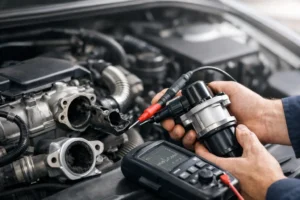
A proper AdBlue non start reset follows diagnosis and repair. The exact process differs by vehicle, but a competent technician will normally read all stored fault codes, check live data, inspect the relevant components and confirm the actual cause before attempting to reset anything.
Once the defect is repaired, the diagnostic tool may be used to clear confirmed faults, reset the AdBlue counter or inducement warning, prime the dosing system, run an SCR test and verify that the ECU accepts the repair. Some vehicles require a road test or a specific drive cycle before the warning clears fully.
There are two important points here. First, a generic code reader may show a fault but not have the functions needed to reset the countdown correctly. Secondly, a reset should not be used to bypass an emissions fault. If the underlying system is still defective, the warning will return and the vehicle may still become a non-starter.
Can you reset it yourself?
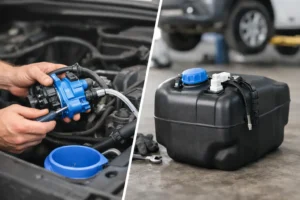
You can safely check the AdBlue level, use only correct-specification fluid and inspect for obvious crystallisation around the filler area or under the vehicle. If the dashboard has only just warned of low AdBlue and no engine management light is present, a sufficient refill may resolve it.
Beyond that, caution is sensible. Many online videos suggest disconnecting the battery, repeatedly cycling the ignition or using inexpensive scan tools to erase codes. These methods do not repair failed sensors, pumps or heaters. Battery disconnection can also create additional faults on some vehicles, while an incomplete reset may leave the countdown unchanged.
If the display says “No engine restart possible” or the mileage remaining is low, arrange diagnosis before the vehicle reaches zero. This is especially important for working vans, where a missed call-out or recovery can cost more than dealing with the fault promptly.
What a proper diagnosis saves you from
AdBlue faults are regularly misdiagnosed as a complete tank failure when the real cause is a NOx sensor, wiring issue, blocked injector or crystallised connection. The opposite can happen too: a sensor is replaced when the tank cannot produce the required pressure.
That is why fault codes must be interpreted alongside live data and physical checks. A code is a clue, not automatically a parts list. The right repair depends on what the ECU is seeing, what the system is actually doing and whether it passes its functional tests afterwards.
For vehicle owners in Greater Manchester, Tech Tuning Northwest provides mobile diesel diagnostics for AdBlue, SCR, NOx sensor and non-start countdown faults. The aim is to identify the reason for the warning first, explain the available repair options clearly, then carry out the correct reset only when the system is ready to accept it.
If your AdBlue countdown is reducing, treat it as time to diagnose the cause rather than time to find a shortcut. A correctly repaired and verified SCR system is the difference between getting back on the road confidently and being left with a diesel that will not start on the drive.