A BMW SCR repair is rarely as simple as replacing the part named by a fault code. When an AdBlue warning appears, or the dashboard starts counting down miles until the engine will not restart, the actual cause could be a NOx sensor, a heater, a dosing fault, contaminated AdBlue, damaged wiring or an issue with the control system. Getting that distinction right is what prevents an expensive round of guesswork.
BMW diesel models use Selective Catalytic Reduction, usually shortened to SCR, to reduce nitrogen oxide emissions from the exhaust. The system injects AdBlue into the exhaust stream, where it helps convert harmful NOx gases into nitrogen and water vapour. It is effective when everything is working correctly, but it relies on several sensors, pipes, heaters, pumps and control modules all reporting the right information.
What does the BMW SCR system do?
On many BMW diesels, including popular 2.0-litre and 3.0-litre models, the SCR system works alongside the DPF and EGR system. These are separate systems, but their faults can sometimes overlap. A car that is struggling to regenerate its DPF, for example, may log exhaust-related faults that complicate the diagnosis.
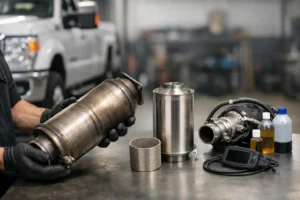
The SCR system stores AdBlue in a tank, normally fitted with a pump and heating element. The fluid is sent through a line to an injector in the exhaust. NOx sensors before and after the SCR catalyst measure whether the system is reducing emissions as expected. The engine ECU uses those readings to calculate how much AdBlue to dose and to monitor the result.
That is why a warning that says there is an AdBlue or emissions problem does not automatically mean the tank is empty. Topping up the fluid may be the right answer in some cases, but it will not repair a failed sensor or a crystallised injector.
Common BMW SCR repair symptoms
The most worrying message is usually a mileage countdown, such as “engine start not possible in 700 miles”. BMW uses this countdown because the vehicle must not be allowed to continue indefinitely with an emissions system fault. Once the count reaches zero, the engine may crank but not restart after it has been switched off.
Other symptoms include an engine management light, an AdBlue warning despite the tank being filled, increased emissions messages, reduced power, poor fuel economy and repeated fault messages shortly after they have been cleared. Some faults produce no noticeable change in how the car drives until the warning becomes more serious.
Do not assume that a full AdBlue tank cancels a countdown. If the system cannot confirm the correct fluid level, pressure, temperature or NOx reduction, it may keep the warning active. Equally, clearing faults without correcting the cause can temporarily remove the message but will not reset the underlying monitor permanently.
The fault codes that often point towards SCR problems
Generic diagnostic readers may show broad codes such as P20EE, which commonly relates to SCR NOx catalyst efficiency, or P204F, which can indicate a reductant system performance fault. Codes relating to NOx sensors, reductant pressure, tank temperature, heater circuits and dosing injectors are also common.
The wording matters, but the code alone is not a parts list. P20EE is a good example. It may appear because the catalyst is not working efficiently, but it can also be caused by inaccurate NOx sensor data, insufficient dosing, an exhaust leak, poor-quality AdBlue or a fault preventing the system from reaching the correct temperature.
BMW-specific diagnostics are more useful than a basic code reader because they can show manufacturer fault descriptions, live values, stored conditions and test routines. A technician needs to see what the upstream and downstream NOx sensors are reporting, whether dosing is being commanded, whether tank pressure is correct and whether the fault returns during a monitored drive cycle.
Why BMW SCR faults happen
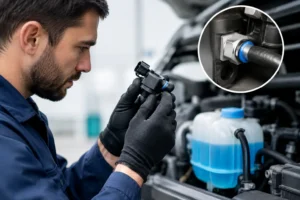
NOx sensors are one of the most frequent causes. They operate in a hot, harsh part of the exhaust system and contain their own electronics. A sensor can fail electrically, give implausible readings or respond too slowly. Replacing the wrong sensor, however, is an easy way to spend money without curing the warning.
AdBlue crystallisation is another regular issue. AdBlue is mostly purified water and urea. When it dries around the injector, pipe connection or tank components, it can leave white crystal deposits that restrict flow or damage seals. Short journeys, leaks and previous overfilling can all make this more likely.
The tank assembly can also develop faults with its heater, level sensor or pump. AdBlue freezes at around -11°C, so the heater is there for a reason. A heater fault may not be obvious during mild weather, but it can still be stored in the ECU and trigger an emissions warning.
Wiring deserves proper attention too. Heat, moisture and road debris can damage connectors and loom sections around the underbody, exhaust and AdBlue tank. Fitting a costly tank or sensor before checking power supplies, earths, connector condition and signal integrity is not a professional diagnosis.
Finally, the SCR catalyst itself can be at fault, particularly on higher-mileage vehicles or where another engine fault has been ignored for a long period. It is usually not the first component to condemn. The supporting sensors, dosing system and exhaust condition should be proven first.
How a proper BMW SCR repair is diagnosed
A sound diagnosis starts by reading all stored and pending faults, not just the one currently shown on the dashboard. The freeze-frame data can reveal engine temperature, vehicle speed, AdBlue level and operating conditions when the issue was detected. This helps separate a one-off event from a repeatable system failure.
The next stage is checking live data and carrying out guided tests where appropriate. This may include comparing NOx sensor values, checking reductant pressure, commanding the pump, testing the heater circuit and inspecting the injector for leaks or crystallisation. The exhaust should also be checked for leaks, as air entering upstream of a sensor can corrupt its readings.
After the fault is repaired, BMW systems often need an adaptation reset, component registration or a controlled drive cycle before the warning clears fully. This is where many unsuccessful repairs fall down. The new part may be fitted correctly, but the ECU has not completed the required checks or still holds a no-start counter that needs the correct procedure.
What does BMW SCR repair cost?
Costs vary widely because “SCR fault” covers several different failures. A wiring repair, injector clean-up or sensor replacement is normally far less costly than a complete tank assembly or SCR catalyst. Labour can also vary depending on access, corrosion and whether the vehicle needs further testing after the repair.
Be cautious of a quote based solely on one generic fault code. If a garage recommends replacing the AdBlue tank, both NOx sensors and the catalyst without test results to support that decision, ask what has been measured. There are cases where several parts have genuinely failed, but that should be demonstrated rather than assumed.
Using the correct AdBlue matters as well. Use sealed, reputable fluid that meets the required specification and avoid storing opened containers for long periods. Contaminated fluid can cause costly damage, while adding water or any substitute will create much bigger problems. If the vehicle has a countdown, do not wait until the final miles to arrange diagnosis. Once it reaches zero, recovering the vehicle to a workshop can add inconvenience and cost.
Can an SCR system be deleted or coded out?
Removing, disabling or coding out an SCR or AdBlue system for road use is not a legitimate repair. It can make the vehicle non-compliant, cause MOT and insurance complications, and leaves the underlying fault unresolved. A proper BMW SCR repair restores the system so the car starts, drives and meets its intended emissions standard.
For BMW owners around Greater Manchester, Tech Tuning Northwest carries out specialist diesel diagnostics with the aim of identifying the failed component before recommending repair. Mobile diagnosis can be particularly useful when a countdown warning makes it risky to keep driving, or when a work vehicle cannot afford unnecessary garage downtime.
A warning light is frustrating, but it is also useful information. Act while the vehicle still starts, keep any fault-code printouts, and insist on diagnosis that explains what has failed and why. That gives you the best chance of a repair that lasts rather than a temporary reset followed by the same countdown a few days later.