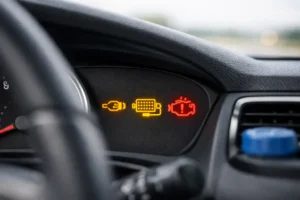
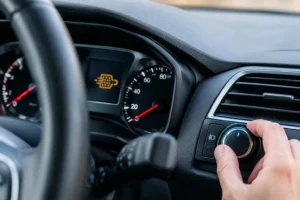
One day the van is driving normally, then the dashboard throws up an emissions warning and starts counting down to a non-start. That is how Euro 6 AdBlue problems usually begin – not with a dramatic breakdown, but with a message that leaves you wondering whether it is safe to keep driving, how much it will cost, and whether anyone is actually going to diagnose it properly.
For a lot of diesel owners, especially people who rely on their car or van for work, the most frustrating part is not the warning itself. It is the guesswork that follows. AdBlue faults are often blamed on the tank, the injector, the pump, the sensor or the software before anyone has proved what has actually failed. On modern Euro 6 vehicles, that can become expensive very quickly.
What Euro 6 AdBlue problems actually mean
AdBlue is part of the SCR system – Selective Catalytic Reduction. Its job is to reduce harmful NOx emissions by injecting a urea-based fluid into the exhaust. When the system is working properly, the vehicle stays compliant with Euro 6 emissions standards and runs without warning messages.
When it is not working properly, the car does not just log a fault and carry on quietly. Many manufacturers build in driver warnings, reduced performance and eventually an engine start prevention countdown if the fault is serious enough or left unresolved. That is why AdBlue issues feel more urgent than some other emissions faults.
The important thing to understand is this: an AdBlue warning does not always mean the AdBlue fluid itself is the problem. Sometimes the fluid level is fine and the real issue is elsewhere in the SCR system.
Common symptoms of Euro 6 AdBlue problems
Most owners notice one of a few familiar signs. The first is an engine management light or emissions warning. The second is a message telling you to top up AdBlue even though you have already done it or know the tank is not empty. The third, and the one that causes the most panic, is the no engine start warning with a mileage countdown.
You may also notice reduced power on some vehicles, poor regeneration behaviour, or other emissions-related faults appearing at the same time. In many cases, AdBlue faults do not come alone. A bad NOx sensor, a DPF problem, failed temperature sensor or wiring issue can push the SCR system into fault mode.
That is why proper diagnosis matters. Reading one code and replacing one part is often how owners end up paying twice.
Why these faults happen
Euro 6 systems are far more sensitive than older diesel emissions setups. They rely on multiple sensors, control modules, heaters, pumps and dosing components all working together. If one part gives implausible readings or stops communicating properly, the ECU can flag an AdBlue fault even when the rest of the system is still functional.
Crystallisation is one common cause. AdBlue can leave behind deposits if it leaks slightly, dries around the injector, or sits in parts of the system where it should not. Over time that can affect dosing and trigger efficiency faults.
NOx sensor failure is another major one. These sensors monitor emissions before and after the SCR process. If one sensor starts reading incorrectly, the vehicle may assume the AdBlue system is not reducing NOx as it should. The result is often an SCR efficiency fault or countdown message, even though the pump and injector are not the real issue.
Heater faults also crop up regularly, especially in colder weather. AdBlue freezes at relatively low temperatures, so many systems use tank heaters or line heaters. If the heater circuit fails, the vehicle may log faults and restrict operation.
Then there are software and communication issues. Some vehicles are known for false level readings, unsuccessful resets after repair, or control modules that need coding or adaptation after components are replaced. This is where a lot of general garages struggle, because replacing hardware does not always solve what is partly an ECU logic problem.
Which parts usually fail
The most common failed components are the AdBlue injector, pump module, NOx sensors, tank level sensor and heater circuits. On some makes, the complete tank assembly becomes a regular culprit because several internal parts are built into one expensive unit. On others, wiring damage or corrosion around connectors causes faults that look like major component failure when they are not.
This is why brand-specific experience makes a difference. The pattern on a Peugeot or Citroën may not be the same as a Volkswagen, Audi, BMW, Mercedes or Ford. The fault code might look familiar, but the actual cause can be different depending on how that manufacturer has designed the SCR system.
A warning light on one vehicle may be fixed with a dosing injector clean and reset. On another, the same message may come from a failed downstream NOx sensor. There is no honest one-size-fits-all answer.
Can you keep driving with an AdBlue fault?
Sometimes yes, but only for a while. A lot depends on the exact warning. If the vehicle is simply asking for AdBlue and the system is otherwise healthy, topping up with the correct fluid may be enough. If the warning remains after topping up, or if the message says no engine start in a certain number of miles, you should not ignore it.
The risk is not always immediate mechanical damage. The bigger problem is being caught out when the countdown reaches zero and the vehicle refuses to start. For anyone using a van for work, that can cause more disruption than the repair itself.
If the vehicle has entered reduced performance mode, or if there are multiple emissions faults present, driving further can also muddy the waters by creating more fault entries and making diagnosis less straightforward.
Why topping up AdBlue often does not fix it
This catches a lot of people out. If the tank level is genuinely low, a top-up can solve the issue. But if a level sensor has failed, the system may not recognise the fluid. If the injector is blocked, topping up will not restore dosing. If a NOx sensor is reporting poor SCR performance, the ECU may still continue the countdown even with a full tank.
There is also the issue of poor-quality fluid, contamination or overfilling mistakes, though these are less common than sensor and system faults. The main point is simple: topping up is a sensible first check, not a guaranteed cure.
How Euro 6 AdBlue problems should be diagnosed
A proper diagnosis starts with more than plugging in a code reader. Fault codes matter, but they are only the starting point. The live data is what tells the real story – AdBlue pressure, tank level, dosing behaviour, NOx readings, exhaust temperatures and system status.
Good diagnostics also involve checking whether the fault is current or historical, whether the ECU has inhibited dosing, and whether another emissions issue is triggering the AdBlue warning as a secondary result. On some vehicles, forced tests can be run to confirm whether the pump builds pressure or whether the injector responds correctly.
This is where experience saves money. If someone understands how these systems fail in the real world, they can usually narrow things down much faster and avoid the usual parts darts.
Repair or replace?
It depends on the fault. Some issues are relatively straightforward – replacing a failed NOx sensor, repairing damaged wiring, cleaning or replacing an injector, or carrying out the correct reset procedure after repair. Others are more involved, especially where the AdBlue tank module has failed internally or the control unit is not processing the system correctly.
There is also a difference between a fault that has just appeared and one that has been ignored for months. Early diagnosis often means a simpler repair. Once multiple faults stack up, or the system has been tampered with previously, the job can take longer.
The cheapest quote is not always the cheapest outcome either. We regularly see diesel owners who have already paid for a sensor or tank elsewhere, only to find the original fault is still there because the actual cause was never confirmed.
What to do if you have an AdBlue countdown
If your dashboard says the engine will not restart after a certain mileage, treat it as a proper fault, not a reminder. Check the AdBlue level if you are genuinely low, but do not assume that filling it will clear the problem. If the warning stays on, get the vehicle diagnosed before the countdown reaches zero.
For drivers around Greater Manchester who cannot afford to lose a day sitting in a garage waiting room, mobile diagnostics can make far more sense. A specialist such as Tech Tuning Northwest can test the system properly at your home or workplace, explain what has actually failed in plain English, and save you from replacing parts on a guess.
The real problem with AdBlue faults
The real issue is not that Euro 6 diesel technology is bad. It is that modern emissions systems are unforgiving when faults are diagnosed badly. AdBlue systems do work well when everything is healthy, but when one sensor, heater or control component drops out, the vehicle can react in a way that feels out of proportion.
If you are dealing with Euro 6 AdBlue problems, the best next step is not panic and not guesswork. It is getting the fault tested properly by someone who understands SCR systems, fault logic and the way these vehicles behave in the real world. A clear answer is usually worth far more than another replacement quote.