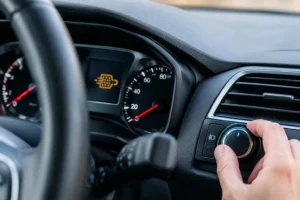
A warning light is frustrating enough. A dashboard message saying “Emissions fault”, “AdBlue system fault” or “Engine start not possible in 650 miles” is worse, particularly when you rely on a diesel car or van for work. This diesel emissions fault code guide explains what those stored codes actually tell you, what they do not tell you, and why replacing the first part named by a code can become an expensive mistake.
Modern diesel emissions systems are closely linked. A failing NOx sensor can trigger an AdBlue warning. A DPF that cannot regenerate can bring up EGR-related codes. Low voltage, damaged wiring or an ECU software issue can imitate a failed component. The fault code is the starting point for diagnosis, not a complete repair instruction.
What is a diesel emissions fault code?
When the engine ECU sees a reading or operating condition outside its expected range, it stores a diagnostic trouble code, often called a DTC. Most scan tools display the code with a short description. Codes beginning with P are powertrain codes, which cover the engine, fuel and emissions systems.
Some codes are generic and appear across many makes. Others are manufacturer-specific, so the same description can mean slightly different things on a Volkswagen, Audi, BMW, Mercedes, Peugeot, Vauxhall, Ford or Land Rover. A basic code reader may show only a broad label such as “NOx sensor fault”. Specialist diagnostics can reveal freeze-frame data, live readings, fault frequency and the ECU conditions when the code was logged.
That detail matters. A code may be current, intermittent or historic. Clearing it without finding the reason it appeared may turn the warning light off briefly, but it will usually return once the ECU runs its checks again.
Diesel emissions fault code guide: the common groups
DPF codes and regeneration faults
The diesel particulate filter catches soot in the exhaust, then burns it off during regeneration. Short trips, repeated stop-start driving, thermostat faults, injector issues and EGR problems can all prevent a proper regeneration.
Common DPF-related codes include P2002, which commonly indicates particulate filter efficiency below threshold; P2463, relating to excessive soot accumulation; and P2458, which can point to an over-long or unsuccessful regeneration. The exact wording varies by manufacturer.
A DPF warning does not automatically mean the filter needs replacing. The key questions are how much soot and ash are present, whether the engine can reach temperature, whether the pressure sensor readings are believable, and whether another fault is blocking regeneration. Forced regeneration can be useful in the right circumstances, but it is not a cure for a split pressure hose, failed sensor or heavily contaminated filter. In the wrong circumstances, it can cause damage or create a serious heat risk.
AdBlue and SCR codes
AdBlue is injected into the exhaust on many Euro 6 diesels. Within the selective catalytic reduction, or SCR, system, it helps reduce harmful nitrogen oxide emissions. When the system detects that emissions control is not working as expected, it may start a no-start mileage countdown.
Codes in this area often include P20E8 for low reductant pressure, P204F for reductant system performance, P207F for reductant quality or system performance, and P20EE for SCR NOx catalyst efficiency. These are common examples, not a reason to order parts from a code alone.
A low-pressure code might be caused by the tank pump, heater, pressure sensor, crystallised AdBlue, wiring, a leak or a control issue. A quality-related code does not always mean the fluid in the tank is contaminated. On some vehicles, the ECU reaches that conclusion because sensor readings or dosing results do not add up.
Do not ignore a countdown message, even if the vehicle is otherwise driving normally. Once it reaches zero, many vehicles will refuse to start until the underlying fault is repaired and the relevant ECU checks have passed. Topping up the tank may help if the level is genuinely low, but it will not clear a component or performance fault.
NOx sensor codes
NOx sensors measure nitrogen oxide levels before and after the SCR catalyst. The ECU uses their readings to calculate AdBlue dosing and confirm that the system is reducing emissions properly.
Typical codes include P2200 for a NOx sensor circuit issue, P2201 for sensor range or performance, and P229F for a downstream NOx sensor performance problem. Heat, water ingress, internal sensor failure, wiring damage and contaminated connectors are all possible causes.
There is a trade-off here. A failed NOx sensor is common on several European diesels, but a sensor performance code can also be the result of an AdBlue dosing or SCR catalyst issue. Checking the upstream and downstream live values, exhaust temperatures and stored data is far more reliable than fitting a sensor because a parts catalogue suggests it.
EGR fault codes
The exhaust gas recirculation valve returns a controlled amount of exhaust gas to the intake under certain conditions. Soot deposits can restrict its movement, while electrical actuator faults, vacuum problems and intake issues can also trigger a warning.
P0401 usually refers to insufficient EGR flow, while P0402 indicates excessive flow. P0403 and similar codes can concern the valve control circuit. Symptoms can include reduced power, rough running, poor fuel economy, black smoke in some cases and repeated DPF regeneration problems.
An EGR code does not prove the valve itself has failed. Carbon build-up in the inlet path, a faulty position sensor, boost leaks or a blocked cooler can affect the expected flow. On certain engines, the EGR is awkward to access, which makes accurate testing particularly worthwhile before authorising labour-intensive work.
Why fault codes often lead to the wrong repair
The most costly repairs tend to start with a plausible code and a rushed conclusion. A garage scans the vehicle, sees a DPF pressure code and quotes for a DPF. The actual fault may be a damaged pressure pipe. Another vehicle shows an AdBlue code, receives a new tank assembly, then returns because the real problem is wiring or a related NOx sensor fault.
Proper diagnosis combines the fault codes with live data, visual checks and a clear understanding of how that particular system behaves. A technician should look at voltage supply, wiring integrity, fluid level and pressure where relevant, temperatures, sensor plausibility, calculated soot load and the status of any inhibited regeneration or SCR monitor.
Vehicle use also matters. A van doing short local jobs has a different DPF risk profile from a motorway commuter. A fault that appears after heavy rain raises different questions from one that appears only on cold starts. This is why a diagnostic report with no context is not enough.
What to do when an emissions warning appears
First, take note of the exact dashboard message and whether there is a mileage countdown, loss of power or flashing engine management light. Avoid repeatedly clearing the code. Doing so can erase useful evidence and may delay the point at which the fault can be confirmed.
If the vehicle has a DPF warning but drives normally, a sustained run may allow a routine regeneration only if there are no other engine or emissions faults and the manufacturer’s conditions are met. Do not attempt this when the warning is accompanied by limp mode, an engine fault, rising oil level, strong fuel smell or a message indicating that regeneration is unavailable.
For AdBlue warnings, use only the correct fluid and avoid overfilling. If a no-start countdown is active, arrange diagnosis promptly rather than waiting for the remaining mileage to disappear. Continuing to drive with a serious emissions fault can create further DPF loading, reduce performance and turn a manageable repair into several related faults.
Getting a meaningful diagnosis
A useful diagnostic visit should leave you knowing more than the code number. You should understand which system has failed its test, what has been checked, whether the fault is confirmed or suspected, and why a recommended repair is necessary.
For owners in Greater Manchester dealing with recurring DPF, EGR, NOx or AdBlue problems, a specialist mobile diagnosis can save the disruption of leaving a car or working van at a garage. Tech Tuning Northwest diagnoses diesel emissions and ECU faults at home or work, using the vehicle data and practical checks needed to avoid guessing at expensive parts.
The sensible next step is rarely to buy the component named on a scan report. Get the fault properly tested while the warning is active, keep a record of the messages shown, and deal with the cause before a small emissions issue stops the vehicle altogether.