If your car feels flat through the mid-range, struggles a bit when overtaking, or drinks more fuel than it should on the same weekly run, a stage 1 remap Manchester drivers ask about is usually not about chasing silly numbers. Most people simply want the car to drive the way it probably should have from the factory – stronger pull, smoother delivery and, in some cases, better economy when driven properly.
That matters even more with modern diesel and turbo petrol cars. Manufacturers often leave a fair bit in reserve, whether for emissions targets, model range separation, or to create one software setup that works across different markets and fuel qualities. A proper Stage 1 ECU remap adjusts those factory settings within the limits of standard hardware. Done well, it can make a car or van feel sharper, easier to drive and less hard work day to day.
What a stage 1 remap in Manchester actually changes
A Stage 1 remap is a software calibration change to the engine control unit. There are no hardware modifications involved. On a healthy vehicle, the tuner adjusts parameters such as boost pressure, fuelling, torque request and throttle response so the engine uses more of its safe operating potential.
That does not mean every vehicle gets the same file or the same result. Engine condition, gearbox type, mileage, service history and the specific ECU all matter. A 2.0 TDI used for motorway miles will respond differently from a small turbo petrol that spends its life in stop-start traffic. The point of a proper remap is not just making it faster on paper. It is making it drive better in the real world.
For many owners, the biggest difference is not top-end power. It is the extra torque lower down the rev range. That is what makes a car pull more cleanly in a higher gear, feel less hesitant joining a motorway and require fewer gear changes around town.
Why drivers choose Stage 1 ECU remapping
Some want more performance. Some want better fuel economy. Quite a few want both, but there is a catch – economy gains depend heavily on how you drive after the remap.
If you use the extra torque sensibly, many vehicles can become more efficient because the engine does not need to work as hard to maintain speed. On the other hand, if you enjoy the added shove at every traffic light, fuel consumption will not improve. That is not a fault with the remap. It is simply how extra performance works.
For van owners and tradespeople, the appeal is often even more practical. A van carrying tools or stock can feel underpowered in standard form, especially on hills or when loaded up. A sensible Stage 1 map can make it more usable without changing the hardware or turning it into something it is not.
Is Stage 1 remap Manchester work safe for your car?
This is the question that matters most, and the honest answer is: it depends on the vehicle and who is doing the work.
A well-written Stage 1 remap on a mechanically sound car is generally considered the safest level of tuning because it stays within the limits of standard components. But that only holds true if the vehicle is healthy to begin with. If the turbo is tired, the clutch is already slipping, or there are hidden fault codes, remapping can expose those weaknesses more quickly.
That is why no-nonsense tuning starts with checking the vehicle properly, not plugging in a tool and loading a generic file in ten minutes. Cheap remaps are cheap for a reason. Some are copied files used across multiple engines with little thought for condition, usage or long-term reliability.
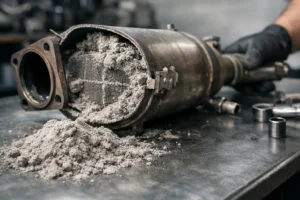
A proper specialist will also be straight with you if your car is not a good candidate. Sometimes the right advice is to sort existing issues first. That might be a boost leak, DPF problem, injector issue or another fault that is already holding the car back. Remapping a vehicle with unresolved problems is asking for trouble.
The gains you can realistically expect
There is no single figure that suits every make and model, but many turbo diesel and turbo petrol vehicles see noticeable gains in both power and torque from Stage 1 software alone. In everyday use, that often means stronger acceleration, more flexibility and less need to push the engine hard.
What you should be wary of are inflated claims. If the numbers sound too good to be true, they usually are. Real tuning is about safe, usable performance, not headline figures designed to win clicks.
The best result is when the vehicle feels more complete. Smoother delivery, cleaner pull through the gears and better response when you ask for it. Drivers often describe it as the car feeling less strangled rather than dramatically transformed into a race car. For a road car or working van, that is exactly how it should be.
When a Stage 1 remap makes sense – and when it does not
A Stage 1 remap usually makes good sense if your vehicle is healthy, you plan to keep it for a while, and you want a noticeable improvement without fitting extra parts. It is also a sensible option if you do regular motorway miles, tow occasionally, or use a van for work and want better pulling power.
It may not be the right move if the vehicle has underlying faults, patchy servicing or drivetrain wear that is already showing. The same goes if you have bought a used car with unresolved warning lights and do not yet know its history properly. In those cases, diagnosis comes first.
There is also the question of driving style. If you rarely use the performance available already and mainly do short urban trips, the difference may be less valuable to you than it would be for someone regularly covering distance. A remap can improve drivability, but it is not magic. It should suit the way you actually use the vehicle.
Why mobile tuning appeals to busy owners
For a lot of people, the main problem is not just the car. It is the hassle. Taking time off, arranging lifts, waiting around at a garage – that all adds cost in ways people do not always count.
That is why mobile tuning has become so popular. Having the work carried out at home or at your workplace is simply easier when your vehicle is central to your day. For owners across Greater Manchester, that convenience is often just as valuable as the performance gain itself.
It also helps when the person doing the job is the person you speak to. No call-centre chain, no subcontractor turning up with limited knowledge of the vehicle, and no confusion over what has or has not been checked. That direct approach tends to suit customers who have already had enough of vague advice elsewhere.
Choosing the right specialist for a stage 1 remap Manchester service
Not all tuning is the same, and this is where people can save themselves a lot of grief. Experience matters. Local reputation matters. Willingness to say no matters as well.
You want someone who understands the difference between safe gains and pushing a car beyond what makes sense on standard hardware. You also want honest advice if your car has issues that need sorting first. A proper specialist should be able to explain what the remap is doing in plain English, what sort of result you can realistically expect, and any limits based on your engine, gearbox or mileage.
For diesel owners in particular, wider knowledge is useful. Vehicles with DPF faults, boost issues or emissions-related problems can behave very differently from healthy examples. A tuning specialist with real diagnostic experience is far more useful than somebody whose whole offer begins and ends with loading software.
That practical, hands-on approach is exactly why many local drivers turn to specialists such as TechTuning Northwest. When you rely on your car or van every day, you want someone who knows the systems, knows the common faults and does the work properly.
The bottom line on Stage 1 remapping
A good Stage 1 remap should make your vehicle nicer to live with, not just quicker for the sake of it. Better torque, smoother delivery and the potential for improved economy are all real benefits when the car is healthy and the work is done properly.
But the best tuning decision is still an informed one. If your vehicle already has faults, sort those first. If your expectations are realistic and you choose an experienced specialist, Stage 1 remapping can be one of the most worthwhile upgrades you make to a road car or working van.
If you are considering it, the right starting point is not chasing the biggest claimed numbers. It is finding somebody who will tell you plainly what your vehicle needs, what it can safely achieve, and whether remapping is the right fit for how you actually use it.