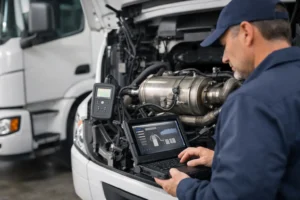
A DPF replacement alternative is often possible, but only when the reason for the blockage has been identified first. A dashboard warning light does not automatically mean the filter itself has failed. Many drivers are quoted four-figure sums for a new DPF when a successful regeneration, professional off-car clean or repair to the underlying fault could put the vehicle right for far less.
The key is not to treat every DPF warning as the same problem. A filter blocked with soot needs a different approach from one full of ash, contaminated by oil, damaged internally or repeatedly blocked because of an EGR, sensor, injector or turbo fault.
Why a DPF becomes blocked
A diesel particulate filter traps soot produced during normal combustion. To prevent the filter filling up, the engine periodically raises exhaust temperature and burns the soot away. This is called regeneration.
Regeneration needs the right conditions. The engine must be up to temperature, there must be enough fuel in the tank, key sensors must be reading correctly and the vehicle generally needs a sustained drive. Short urban trips, school runs and stop-start work are common reasons a car or van cannot complete a passive regeneration.
That said, driving style is not always the full story. On Volkswagen, Audi, BMW, Mercedes, Ford, Vauxhall, Peugeot, Citroen and many other diesel vehicles, a DPF can remain blocked because another fault is stopping regeneration. Common causes include a faulty differential pressure sensor, split pressure pipes, failed exhaust temperature sensor, sticking EGR valve, thermostat running too cool, injector issues, boost leaks and excessive oil consumption.
If the fault that caused the blockage is ignored, even a brand-new DPF can block again.
The main DPF replacement alternatives
The right repair depends on the soot level, ash load, condition of the filter and live diagnostic data. There is no honest one-size-fits-all answer.
A proper motorway drive
If the warning has only just appeared and the vehicle is still driving normally, a continuous run at steady speed may allow a pending regeneration to finish. This is most likely to work where the soot load is relatively low and there are no stored faults preventing regeneration.
It is not simply a case of driving hard. Running an already overloaded DPF at high revs can increase exhaust temperatures and make matters worse. If the engine management light is on, the vehicle is in reduced power, or the DPF light is flashing, it is sensible to diagnose it before attempting a long journey.
Diagnostic-led forced regeneration
A forced regeneration is started using suitable diagnostic equipment while the vehicle is stationary or driven under controlled conditions. The ECU commands extra heat into the exhaust to burn soot from the filter.
This can be a cost-effective alternative to DPF replacement where the filter is structurally sound and the readings show a soot blockage rather than an excessive ash load. Before starting, a technician should check oil level and quality, coolant temperature, exhaust temperature sensors, pressure readings and fault codes. A forced regeneration on a vehicle with the wrong underlying fault can fail, overheat components or leave the engine oil diluted with diesel.
It is also worth knowing that a forced regeneration does not remove ash. Ash is the non-combustible residue left behind by oil additives and normal engine wear. It gradually accumulates over the life of the filter.
Professional DPF cleaning
Professional cleaning is often the strongest DPF replacement alternative for an older vehicle with a high ash load. The DPF is removed and cleaned using specialist equipment designed to flush soot, ash and residue from the filter channels. It should then be flow-tested or inspected before refitting.
This is very different from pouring a bottle of cleaner into the fuel tank. Fuel additives may support normal driving in limited cases, but they cannot reverse a severely restricted filter or cure a sensor fault. Likewise, an in-situ chemical clean can help with some soot-related blockages, but it has limits where ash accumulation is high or the filter is heavily contaminated.
Off-car cleaning takes more labour because the DPF must be removed, but it can save a significant amount compared with fitting a genuine replacement unit. It makes particular sense when diagnostics confirm the filter is intact and the vehicle has covered enough miles for ash loading to be the issue.
Repairing the fault that is blocking regeneration
Sometimes the DPF is the victim, not the cause. A failed differential pressure sensor may falsely report a blockage. A thermostat that leaves the engine running too cold can prevent regeneration from starting. An EGR fault can alter airflow and soot production, while leaking injector seals, turbo problems or a worn engine can create more particulate matter than the DPF system can cope with.
This is why fault codes alone are not enough. Codes point a technician in the right direction, but live data tells the fuller story. Useful checks include calculated soot mass, ash estimate, differential pressure at idle and at raised revs, exhaust gas temperature readings, regeneration history, engine coolant temperature and whether the ECU is requesting or inhibiting a regeneration.
Fixing a £60 sensor or a failed thermostat before cleaning the filter can prevent the same warning returning a week later.
When replacement is the correct answer
There are situations where cleaning or regeneration is no longer sensible. A new DPF may be required if the filter substrate is cracked, melted, broken up internally or contaminated beyond recovery. Physical damage can occur after repeated failed regenerations, excessive exhaust temperatures or impact damage underneath the vehicle.
Replacement may also be the better option if an attempted clean shows poor flow afterwards, or if the original DPF is simply at the end of its usable life. The quality of the replacement matters. Cheap pattern DPFs can cause fitting and performance issues, so the part must be suitable for the exact engine and emissions specification.
After replacement, the ECU may need relevant learned values reset and the cause of the original blockage must still be addressed. Replacing the filter without diagnosis is often the expensive version of guessing.
Is DPF removal an alternative?
No, not for a vehicle used on UK roads. Removing the DPF, hollowing it out or changing ECU software to hide the fault can make a vehicle illegal for road use and can lead to an MOT failure. It also leaves the original engine problem unresolved, whether that is excessive soot production, a failed sensor or a poor-running emissions system.
A legitimate repair restores the vehicle to the emissions equipment it was built with. That protects its reliability, resale prospects and your ability to use it without an avoidable problem at test time.
Signs you should stop guessing
Arrange a proper diagnostic check if the DPF light keeps returning after a long drive, the engine has gone into limp mode, the cooling fan runs after short trips, fuel economy has worsened, or the oil level has risen. A rising oil level can be caused by diesel dilution during interrupted regenerations and should not be ignored.
The same applies if the vehicle has an EGR, engine management or glow plug warning alongside the DPF message. On many diesels, one apparently unrelated fault is enough to stop the ECU authorising a regeneration.
For owners in Greater Manchester who need the vehicle for work or family life, Tech Tuning Northwest can assess DPF faults using live data rather than relying on a generic code reader or assuming a replacement is needed. A mobile diagnosis at home or work can establish whether the sensible route is regeneration, cleaning, repair of the underlying fault or, where necessary, a replacement filter.
The best outcome is not the cheapest repair on the day. It is the repair that gets the DPF regenerating normally again and keeps the warning light from returning after the next few journeys.