A healthy diesel often has more usable performance available than it delivers from the factory. That is where stage 1 remap benefits can make a real difference: stronger mid-range pull, less effort when towing or overtaking, and a vehicle that feels more responsive in normal driving. But the word “healthy” matters. A remap is not a repair for an underlying DPF, EGR, boost or fuel-system fault.
For drivers of diesel cars and vans, a properly written stage 1 calibration can be a sensible improvement. It should be based on how the engine, turbocharger, gearbox and emissions equipment actually behave, rather than a generic file loaded in a hurry. The best outcome is not the biggest claimed power figure. It is a reliable vehicle that drives better day after day.
What is a stage 1 remap?
Your engine is controlled by an ECU, or engine control unit. It uses software maps to decide how much fuel to inject, when to inject it, how much turbo boost to request and how torque is delivered. Manufacturers set these values conservatively for many reasons, including worldwide fuel quality, climate, model ranges, warranty protection and the need to use the same engine in several vehicles.
A stage 1 remap changes selected ECU calibration values while retaining the vehicle’s standard mechanical parts. There is no requirement for a larger turbo, intercooler, exhaust system or upgraded injectors. On a suitable diesel, the adjustment usually focuses on improving torque delivery and refining the way the engine responds to throttle input.
It is different from fitting a plug-in tuning box. A tuning box normally intercepts sensor signals and alters what the ECU sees. An ECU remap changes the software strategy within the original control unit. Neither approach makes a neglected or faulty vehicle healthy, but a proper ECU calibration gives greater control over the changes being made.
The genuine stage 1 remap benefits
The main benefit most drivers notice is torque. Diesel engines already produce useful pulling power at low revs, and a well-calibrated remap can increase it through the middle of the rev range. In practice, this means fewer downchanges on hills, easier joining of fast-moving traffic and more relaxed overtaking when conditions allow.
For a van carrying tools, stock or passengers, that extra mid-range torque can be more useful than a headline bhp figure. A 2.0-litre diesel does not need to be driven hard to make progress, which can make everyday work less tiring. The same applies to cars used for regular motorway miles or towing within their legal limits.
Throttle response can also improve. Some standard diesel calibrations feel hesitant when pulling away or accelerating from low revs. A careful stage 1 map can reduce that lazy feeling without making the throttle overly sharp or jerky. The aim should be smooth, predictable power delivery, particularly on wet roads and in stop-start traffic.
Fuel economy is often mentioned among stage 1 remap benefits, but it needs an honest explanation. A remap may improve economy if the driver uses the added torque to change up earlier and drive with a lighter throttle. It will not save fuel if the extra performance encourages harder acceleration. Your real-world result depends on driving style, journey type, traffic, load and the condition of the vehicle.
Why one diesel can be remapped and another should not
Two apparently identical vehicles can need very different advice. One may have a clean fault memory, correct boost pressure, a healthy DPF and no signs of excessive smoke. The other may have an intermittent NOx sensor code, a sticking EGR valve, a split boost hose or a DPF that is struggling to complete regeneration.
Adding torque to the second vehicle before diagnosing those faults is poor practice. Higher load can expose an already weak clutch, worsen boost control issues or increase soot production when air-flow or fuelling is not right. If an engine management light, glow plug light, DPF warning light or AdBlue warning is present, establish the cause first.
This is particularly relevant on modern Euro 5 and Euro 6 diesels. The ECU works alongside the DPF, EGR and, on many vehicles, the SCR/AdBlue system. These systems are designed to reduce emissions, and they must remain present and functioning. A legal, responsible remap does not remove emissions controls or mask the warning lights that tell you there is a fault.
Checks worth doing before a remap
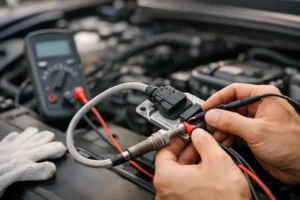
A professional assessment should start with a diagnostic scan, not a sales pitch. Stored and pending fault codes matter, even where no warning lamp is currently displayed. Some faults only appear under load, during a regeneration event or after a long journey.
The technician should review live data where needed. Depending on the vehicle, this can include requested and actual turbo boost, air-mass readings, injector correction values, fuel pressure, DPF soot loading, exhaust temperature sensors and EGR operation. A road test may also reveal clutch slip, poor low-end response or limp-mode behaviour that a stationary scan will not show.
There are a few practical signs that should make you pause before booking any performance work:
- Repeated DPF regenerations, a DPF warning light or fans running frequently after short journeys.
- Black smoke under acceleration, unusual whistling, oil leaks around boost pipes or a noticeable loss of power.
- An AdBlue countdown, SCR warning, NOx sensor fault or engine management light.
- Clutch slip, gearbox hesitation or harsh changes under load.
None of these automatically means the vehicle cannot be remapped later. They mean the fault should be diagnosed and repaired first. That approach costs less than trying to tune around a problem and then paying for damage or repeated recovery work afterwards.
How much power can you expect?
The answer depends on the exact engine, ECU version, gearbox and vehicle condition. Turbocharged diesels often respond well because the software can alter torque limits, boost targets and fuelling within sensible limits. A modest 2.0-litre diesel may gain a useful amount of torque, while a larger engine can often deliver a more substantial change.
Be cautious of fixed figures advertised for every vehicle. Manufacturers produce engines in different states of tune, and ECU software versions vary. A van that has covered 150,000 hard-working miles should not be treated in the same way as a low-mileage car with a proven service history. Sensible calibration is about respecting the hardware that is already fitted.
Gearbox limits also matter. Manual clutches and dual-clutch automatic gearboxes are designed around specified torque levels. A good remap takes this into account rather than chasing a number that looks impressive online. The fastest route to an unhappy customer is a map that makes the clutch slip or causes transmission complaints.
Insurance, MOT and emissions considerations
A remap is a vehicle modification, so you should tell your insurer. Failing to declare it can create problems if you need to make a claim. Some insurers are more accommodating than drivers expect, but it is worth checking before the work is carried out.
For MOT purposes, the vehicle must meet the applicable emissions standards and should not have emissions equipment removed or visibly tampered with. A diesel that produces excessive smoke, has an illuminated emissions warning light or has a missing DPF is not being looked after properly, regardless of how well it seems to drive.
It is also worth keeping up with servicing. Correct oil specification is especially important on DPF-equipped diesels, and overdue filters, poor-quality fuel or an air leak can all affect how the vehicle performs after a remap.
Choosing the right approach
A stage 1 remap should feel like a measured improvement, not a gamble. Ask whether the vehicle will be checked for existing faults, whether the original ECU software is saved and whether the calibration is suitable for your engine and gearbox. Be wary of anyone promising that a remap will cure warning lights, fix a blocked DPF or solve an AdBlue fault without diagnosis.
For owners in Greater Manchester who rely on a diesel car or working van, mobile diagnostics can be particularly useful when the vehicle is at home, at work or unable to make a convenient garage booking. Tech Tuning Northwest approaches remapping as part of the wider picture: first make sure the diesel engine and emissions systems are operating correctly, then discuss whether a sensible calibration suits the vehicle and how it is used.
The right remap should leave you with a cleaner, smoother driving experience in the sense of better control and stronger usable torque, not new warning lights or promises that never matched the vehicle. Get the diagnosis right first, and the performance decision becomes much easier.