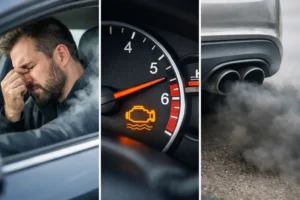
A diesel that starts smoking is rarely something to ignore, especially if it has also lost power, brought on an engine warning light or started using more fuel. So, can EGR valve cause smoke? Yes. A sticking, clogged or electronically faulty EGR valve can upset combustion enough to create visible exhaust smoke. But the colour of that smoke, when it appears and any fault codes stored in the ECU are what separate an EGR issue from a DPF, injector, turbo or coolant problem.
How an EGR valve can cause smoke
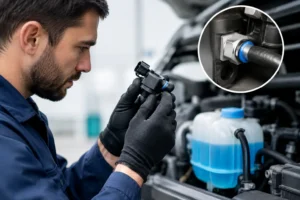
EGR stands for Exhaust Gas Recirculation. The valve feeds a measured amount of exhaust gas back into the inlet system under certain driving conditions. This lowers combustion temperatures and helps reduce harmful NOx emissions.
On a healthy diesel, the ECU opens and closes the EGR valve precisely. The amount of recirculated gas changes with engine speed, load and temperature. Over time, however, soot and oily vapour build up in the valve and inlet tract. This is particularly common on vehicles used for short journeys, stop-start work or local deliveries.
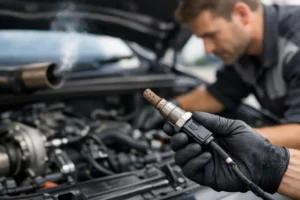
If the EGR valve sticks open, too much exhaust gas enters the engine when it should be taking in clean air. There is less oxygen available for combustion, so the engine may run rough and produce black or dark grey smoke when accelerating. It can also feel flat, hesitate at low revs or enter reduced-power mode.
If the valve sticks closed, the symptoms can be less obvious at first. The engine may still drive reasonably well, but NOx emissions rise and the ECU may log a fault. In some cases, incorrect airflow readings can still lead to smoke, poor fuel economy or DPF regeneration problems.
The key point is that an EGR valve does not usually create smoke in isolation. It changes the air-to-fuel balance and combustion conditions. That can make soot visible at the tailpipe, particularly when another issue such as a restricted intake, split boost hose or overloaded DPF is also present.
What smoke colour tells you about an EGR fault
Black smoke under acceleration
Black smoke is the colour most commonly linked with an EGR valve that is stuck open or heavily carboned up. It means the diesel is receiving too much fuel for the amount of oxygen available, leaving unburnt carbon particles in the exhaust.
You may notice a black puff when pulling away, overtaking or climbing a hill. On modern diesels with a working DPF, heavy visible black smoke is not normal. The filter should trap most soot, so obvious smoke can indicate a fault serious enough to overwhelm the system or a leak before the DPF.
An EGR fault is one possible cause, but it is not the only one. A faulty MAF sensor, boost leak, sticking turbo actuator, damaged intercooler hose or injector issue can produce very similar symptoms. This is why replacing an EGR valve based on smoke alone is often an expensive guess.
White or grey smoke
White or pale grey smoke can occur when combustion is incomplete, especially on a cold engine. A badly operating EGR valve may contribute by diluting the intake charge at the wrong time, causing rough running and a diesel smell from the exhaust.
However, persistent white smoke needs careful diagnosis. It can also point to an injector that is over-fuelling or leaking, low compression, a glow plug problem, or coolant entering the cylinders. If the smoke has a sweet smell, coolant level is dropping or the engine is overheating, stop driving the vehicle and have it checked promptly. That is not a symptom to put down to the EGR valve without testing.
Blue smoke
Blue smoke normally means the engine is burning oil. An EGR problem is unlikely to be the direct cause. A turbo oil seal, excessive crankcase pressure or internal engine wear is more likely.
There is one area of overlap: many diesel EGR systems become clogged with a sticky mix of soot and oil vapour. The oil is usually coming from the breather system or normal inlet contamination, rather than from the EGR valve itself. Cleaning or replacing the valve without finding why excessive oil is in the intake may only provide a short-term improvement.
Other signs of a faulty EGR valve
Smoke usually arrives with other clues. Common signs include uneven idling, hesitation as you accelerate, poor fuel economy, difficult starting, a noticeable diesel smell and reduced performance. Some vehicles will display an engine management warning light; others may limit power without much warning.
Diagnostic trouble codes commonly associated with EGR faults include P0400, P0401, P0402, P0403, P0404 and P0405. The exact meaning varies slightly by manufacturer, but they generally relate to EGR flow being too low, too high, outside the expected range or affected by an electrical circuit fault.
Codes are useful, but they do not automatically prove the valve has failed. For example, a P0401 low-flow code may be caused by a carbon-blocked EGR cooler or intake passage, a vacuum control fault on an older system, damaged wiring, a failed position sensor or an airflow reading that does not match the ECU’s calculation. The code tells a technician where to investigate, not which part to order.
Why EGR faults and DPF problems often appear together
The EGR and DPF systems are closely linked because both manage exhaust emissions. When an EGR valve allows too much exhaust gas into the intake, combustion can become dirtier and soot output increases. That extra soot loads the DPF more quickly.
At the same time, a DPF that cannot regenerate properly can create exhaust back-pressure and make the engine feel restricted. Drivers may then assume the EGR valve is at fault because the car is sluggish and smoking. On some European diesels, including BMW, Volkswagen Group, Ford, Mercedes-Benz, Peugeot, Citroen and Vauxhall models, it is common to find more than one contributing issue.
Short trips are a frequent trigger. The engine may never reach the temperature or driving conditions needed for a proper DPF regeneration, while the EGR system continues to collect soot during low-speed use. Vans used for local trade work are especially vulnerable, not because they are poorly made, but because their daily routine does not suit the emissions system’s operating requirements.
Can cleaning the EGR valve stop the smoke?
Sometimes, yes. If the valve is mechanically sound and simply restricted by carbon, professional cleaning can restore its movement and improve airflow. It is generally more effective when the inlet passages, EGR cooler and related sensors are assessed at the same time.
Cleaning is not always the right answer. Electronic EGR valves can suffer motor, position-sensor or wiring faults that cleaning will not fix. A valve with excessive wear, broken gears or a failed actuator needs replacement. Equally, fitting a new EGR valve will not cure black smoke caused by a split intercooler pipe or faulty injector.
This is why the sensible order is diagnosis first, repair second. Live diagnostic data can show commanded versus actual EGR position, measured airflow, boost pressure, DPF soot load, exhaust temperatures and injector correction values. Those readings make it possible to identify whether the EGR valve is the cause, a side effect or not involved at all.
What to do if your diesel is smoking
Avoid repeatedly accelerating hard to “clear it out”. If the vehicle is producing black smoke, struggling to pull or showing a warning light, forcing it can increase soot loading and turn a manageable problem into a blocked DPF.
Check the basics without dismantling anything: note the smoke colour, whether it happens cold or hot, whether it is worse under load, and whether coolant or oil levels are changing. If there is a warning message, record the wording before it disappears. These details help narrow the fault down quickly.
A proper diagnostic check should include a full fault-code scan, live data assessment and a visual inspection of the intake and boost system. On the right vehicle, it may also involve checking DPF differential pressure, injector balance figures and the operation of the EGR valve and associated cooler. Tech Tuning Northwest carries out this type of diesel fault diagnosis at home or work across Greater Manchester, helping owners avoid replacing costly parts on assumption.
Visible smoke is your diesel telling you that combustion or emissions control is no longer working as it should. Deal with it while the symptoms are clear, rather than waiting for a blocked DPF, permanent limp mode or a much larger repair bill.