A DPF warning light is easy to ignore when the vehicle still starts and drives, but DPF regeneration is not something to leave until the car goes into limp mode. For a commuter doing short runs around Manchester, or a van owner losing time between jobs, the difference between a successful regeneration and a blocked filter can be hundreds of pounds and an unusable vehicle.
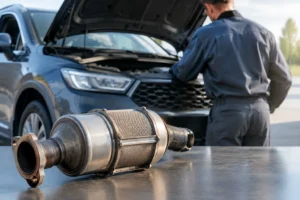
The diesel particulate filter, usually called the DPF, sits in the exhaust system. Its job is to trap soot produced by the engine before that soot leaves the tailpipe. It is a useful system, but it relies on the vehicle being able to burn that soot away at the right time. When it cannot, the soot level rises, warning lights appear and the engine management system starts protecting itself.
How DPF regeneration works
A DPF cannot keep storing soot forever. Regeneration is the process of raising the exhaust temperature enough to burn the trapped soot into a much smaller amount of ash. Ash does not burn away, but soot does.
During normal longer-distance driving, some vehicles carry out passive regeneration. The exhaust naturally gets hot enough for soot to burn off without the driver noticing. This is most likely on a sustained run at steady speed, once the engine is fully warm.
Most modern diesels also use active regeneration. The engine ECU changes the fuelling strategy, often adding extra fuel late in the combustion cycle, to raise exhaust gas temperature. The vehicle may increase idle speed, run the cooling fan after the engine is switched off, use more fuel or smell hotter than usual. These can all be normal signs that an active regeneration is taking place.
The problem comes when that cycle is interrupted repeatedly. Switching off halfway through a regeneration does not usually cause an immediate failure, but doing it again and again allows soot loading to build. Short school runs, stop-start traffic and low-speed local journeys are the classic conditions for it.
Signs DPF regeneration is struggling
The first sign is often a DPF warning light. Depending on the make and model, you may also see an engine management light, a glow plug warning light or a message telling you to continue driving. Some vehicles reduce power straight away; others will run normally until the soot figure reaches a higher limit.
Common symptoms include poor acceleration, reduced fuel economy, the radiator fan running loudly, a higher idle speed and an engine that feels restricted under load. On some diesels, repeated failed regeneration causes diesel fuel to contaminate the engine oil. If the oil level rises or smells strongly of diesel, do not ignore it. Excessively diluted oil can cause serious engine damage.
Fault codes can point in the right direction, but they are not a diagnosis on their own. P2002 commonly relates to DPF efficiency, while P2463 can indicate excessive soot accumulation. Codes for exhaust temperature sensors, differential pressure sensors, EGR flow, boost control or glow plugs may be the real reason a regeneration has failed. Clearing a code without fixing the cause simply sends the problem round again.
A warning light does not always mean the DPF has failed
This is where many owners receive poor advice. A blocked DPF is often blamed first, then a replacement filter is quoted. In reality, the filter may still be structurally sound but unable to regenerate because another component is giving incorrect readings or preventing exhaust temperatures from reaching the required level.
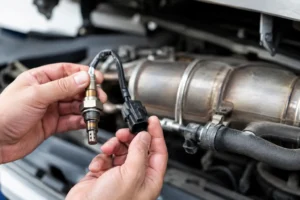
A pressure sensor with blocked pipes can report a falsely high soot load. A failed temperature sensor can stop the ECU authorising regeneration. An EGR valve stuck open may lower combustion and exhaust temperatures. Thermostat faults matter too: if the engine never reaches proper operating temperature, regeneration conditions may not be met. These faults are seen across Volkswagen Group, BMW, Mercedes-Benz, Ford, Peugeot, Citroën, Vauxhall and many diesel vans, although the exact strategy differs between models.
Can you clear the DPF light by driving?
Sometimes, yes. If the warning has only just appeared, there are no other serious warning lights and the vehicle is driving normally, a continuous drive may allow an active regeneration to complete. The engine needs to be fully warm, and a steady run is generally more useful than crawling through town.
However, there is no magic mileage, speed or gear that works for every diesel. Advice such as “drive it hard for 20 minutes” is too simplistic. If the ECU has already disabled regeneration due to high soot loading, a sensor fault, low fuel level, coolant-temperature issues or another stored fault, extra driving will not cure it. Pushing a heavily loaded DPF too hard can increase exhaust temperatures and make matters worse.
If the light returns shortly after a longer run, power is restricted, the engine oil level is rising, or several warning lights are present, stop treating it as a driving issue and have the vehicle diagnosed. That is normally cheaper than waiting for a recovery or a replacement DPF quote.
Why DPF regeneration fails
Short journeys are a major contributor, but they are only part of the story. A healthy diesel that regularly completes its regeneration cycles can cope with occasional urban use. Repeated faults usually mean there is a reason the cycle cannot finish.
The most common causes are a faulty differential pressure sensor or split sensor hose, failed exhaust gas temperature sensor, thermostat issue, EGR fault, boost leak, injector problem, glow plug or glow plug module fault, and incorrect engine oil. Using an oil that does not meet the manufacturer’s low-SAPS specification creates more ash, reducing the filter’s long-term capacity.
Fuel level can also matter. Many ECUs will not start active regeneration when fuel is low because the process uses additional fuel. Frequent aborted cycles can lead to oil dilution, which may then trigger further faults or service warnings.
There is also a difference between soot and ash. Soot is the material regeneration is designed to remove. Ash is the non-combustible residue left behind over time from oil additives and normal engine wear. A filter with excessive ash loading cannot be restored by a standard regeneration alone. Depending on its condition, it may need professional off-car cleaning or replacement.
What proper DPF diagnosis looks like
Proper diagnosis starts with more than reading a generic code. A specialist should check live data, including calculated soot load, ash load where available, differential pressure at idle and higher revs, exhaust temperature readings, coolant temperature and the status of previous regeneration attempts.
The stored fault history matters as well. If a vehicle has repeatedly logged temperature sensor or EGR faults, forcing a regeneration before addressing them is unlikely to last. Physical checks are equally valuable: pressure hoses can clog with soot or split, exhaust leaks can affect readings, and wiring near hot exhaust components can deteriorate.
A forced regeneration can be useful when the system is otherwise healthy and soot loading is within a safe range. It is not a universal fix. The ECU needs accurate sensor data, the engine needs to be running correctly and the DPF must not be cracked, melted or overloaded with ash. Forcing regeneration on the wrong vehicle is how an avoidable fault becomes an expensive one.
Cleaning, regeneration or replacement?
The right repair depends on what the tests show. If the DPF is soot-loaded because a sensor fault interrupted normal cycles, repairing the fault and completing a controlled regeneration may be enough. If ash loading is high but the filter core is intact, professional cleaning can be a sensible alternative to replacement.
Replacement is appropriate when the filter is physically damaged, contaminated beyond recovery or cannot meet pressure-flow requirements after cleaning. Be wary of anyone offering a guaranteed cure before checking live data and the underlying cause. The cheapest first step is not always the cheapest repair.
For drivers who rely on a car or van for work, mobile diagnosis can save the disruption of arranging a garage visit and guessing at parts. Tech Tuning Northwest diagnoses DPF and related diesel emissions faults properly, then explains the evidence and repair options before work is carried out.
A DPF warning is best treated early, while the vehicle can still regenerate safely and the root cause is easier to identify. Deal with the reason it failed, not just the light on the dashboard, and your diesel has a far better chance of staying reliable.