Someone turns up on your drive with a laptop, plugs into your vehicle, and an hour later it feels sharper to drive. That is usually what people mean when they search for mobile ecu remapping at home. It sounds simple, and sometimes it is. But there is a big difference between a proper mobile remap carried out with checks and a quick file flashed in with no real understanding of the vehicle underneath.
If you drive a diesel car or van and rely on it for work, school runs or commuting, convenience matters. Nobody wants to lose a day at a garage for something that can be done outside the house or while the van is parked at work. The key question is not just whether mobile remapping can be done at home. It is whether it is being done properly.
What mobile ECU remapping at home actually means
Your ECU is the engine control unit. It is the computer that controls fuelling, boost pressure, torque limits and other operating strategies. Remapping means changing the software calibration so the engine behaves differently from the factory settings.
With mobile ECU remapping at home, the technician comes to the vehicle rather than you taking it into a tuning workshop. In many cases, the original software is read through the diagnostic port, adjusted, then written back to the ECU on site. On some vehicles the process is straightforward. On others, especially newer or more heavily protected ECUs, it can involve bench or boot access, which is a more involved job and not always suitable on a driveway.
That is why a genuine specialist will never pretend every vehicle is the same. Some can be remapped safely at home with no issue. Some need more time, more equipment, or a different approach altogether.
Why people choose home remapping
The obvious benefit is convenience. If you are in the middle of a working week, a mobile service saves time and disruption. Van owners, tradespeople and anyone juggling a busy schedule usually care less about tuning jargon and more about getting the vehicle sorted with minimum hassle.
There is also a practical benefit if the car already has drivability issues. A lot of owners are told they need a remap when the real problem is an underlying fault – boost leak, sticking EGR, DPF restriction, failing sensor, AdBlue issue or poor injector performance. A mobile specialist who understands diesel diagnostics can assess the vehicle where it sits, rather than just selling software and hoping for the best.
That matters because a remap will not fix a fault. In some cases, it makes an existing issue more obvious.
How a proper at-home remap should be carried out
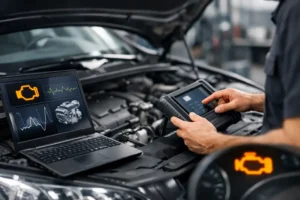
A good remap starts before any file is written. The vehicle should be checked for fault codes, warning lights, stored issues and obvious mechanical problems. If the engine is not healthy, the software should not be altered until the problem is understood.
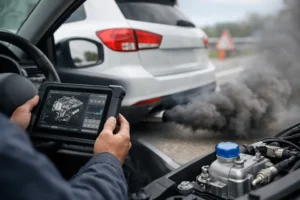
For diesel vehicles, this step is especially important. We regularly see cars and vans with DPF faults, EGR flow problems, boost control faults, NOx sensor issues or AdBlue warnings where somebody has suggested a remap as if it is a cure-all. It is not. If there is a fault in the emissions or air system, the ECU is already trying to compensate. Changing the software on top of that can lead to more smoke, poor fuel economy, limp mode or repeat warning lights.
A proper mobile technician should also keep the battery voltage stable during reading and writing. Voltage drops during programming are one of the risks people do not think about, but they matter. If the process is interrupted, the ECU can become corrupted and the vehicle may not start.
Once the software side is done, the vehicle should be checked again. The best result is not just more power on paper. It is smooth delivery, clean running and no nasty surprises afterwards.
The difference between a safe remap and a bad one
Most people are not comparing code or calibration data. They are judging by price, promises and whether the car feels quicker afterwards. That is where problems start.
A bad remap is often a generic file pushed onto a vehicle with little or no checking. It might feel stronger at first, but that does not mean it is well calibrated. Excessive torque low down can stress clutches and gearboxes. Poor fuelling changes can increase smoke output and DPF loading. Over-ambitious boost targets can expose weak hoses, sticking actuators or tired turbos.
A safe remap is matched to the vehicle and its condition. It respects the limits of the engine, turbo, clutch and emissions system. On a healthy diesel, that usually means a noticeable improvement in drivability rather than a dramatic, all-or-nothing transformation.
If somebody guarantees huge gains on every model without asking about mileage, service history, previous faults or current warning lights, be cautious. Real tuning is more measured than that.
Is mobile ECU remapping at home right for every vehicle?
No, and that is the honest answer.
Some vehicles are ideal for it. A healthy diesel with no active faults, stable battery support and an ECU that allows safe programming through the diagnostic port can often be remapped at home without any problem. For many owners, that is the easiest route.
Other vehicles need more care. If there are current DPF warnings, AdBlue countdown messages, EGR faults, boost deviations or non-start issues, diagnosis comes first. If the ECU is heavily encrypted or requires physical access, the job may not suit a driveway appointment. If the clutch is already slipping or the automatic gearbox has known issues, increasing torque may not be sensible.
This is where experience matters more than marketing. The right answer is not always yes.
Common misunderstandings about home remapping
One of the biggest misunderstandings is that remapping automatically improves fuel economy. It can, but it depends how the vehicle is driven and whether the engine is working correctly to begin with. If you use the extra performance all the time, fuel use may go the other way. If the car had a hidden fault before the remap, economy may stay poor until that is fixed.
Another misconception is that remapping and fault diagnosis are separate worlds. On diesel vehicles, they overlap more than people think. A van with sluggish performance may need software changes, but it may also have a partially blocked DPF, a tired MAF sensor, split boost pipe or EGR issue. Software should come after understanding the engine, not instead of it.
People also assume any mobile tuning service offers the same standard. In reality, there is a wide gap between a proper diagnostic-led specialist and someone who simply loads files supplied by somebody else.
What to check before booking
Before booking mobile ecu remapping at home, ask what checks are carried out first. Ask whether fault codes are read before programming. Ask what happens if problems are found. Ask whether the original file is saved. Ask whether your specific ECU can be safely programmed on site. These are normal questions, not awkward ones.
You should also mention any recent issues, even if they seem unrelated. DPF lights, AdBlue warnings, reduced power, hard starting, hesitation, smoke, poor regeneration behaviour or previous repair attempts all matter. The more honest you are about the vehicle, the less chance of trouble later.
If a specialist brushes those questions aside and pushes straight to price, that tells you something.
When diagnosis matters more than tuning
A lot of diesel owners search for a remap because the vehicle feels flat, unresponsive or inefficient. Sometimes a remap is the right service. Sometimes the real answer is proper diagnosis.
That is particularly true on European diesels where emissions systems are tightly integrated into engine management. A fault with the EGR, DPF, SCR or sensor network can affect power delivery and fuel use long before a complete breakdown. If those systems are not working as they should, software changes alone do not solve the root cause.
This is one reason specialist mobile services are useful when done properly. A technician who understands both ECU software and diesel fault diagnosis can tell the difference between a vehicle that is ready to be remapped and one that needs repair work first. That saves money, repeat visits and the frustration of chasing the wrong fix.
For drivers around Greater Manchester, that practical approach usually matters more than big claims. People want the vehicle sorted properly, with clear advice and no nonsense.
The real value of a home visit
The best part of a mobile service is not just that it happens on your drive. It is that the work can be assessed in the real world, on the actual vehicle you use every day, with its current symptoms and history. That gives a better chance of getting the right result than guessing from a booking form.
A proper remap should feel like part of a wider understanding of how the engine is running, not a magic trick performed through a laptop. If the vehicle is healthy and suitable, home remapping can be a smart, efficient option. If it is not, the right specialist will say so and explain why.
That honesty is worth more than a quick power bump, because good software only works well when the vehicle underneath it is working properly too.