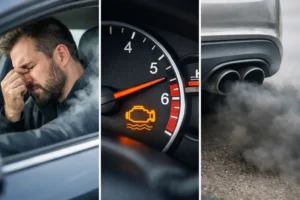
A NOx sensor replacement is often suggested as soon as an AdBlue or engine-management warning appears. Sometimes that is the right repair. Just as often, the sensor is reporting a problem caused by damaged wiring, an exhaust leak, poor SCR performance or an AdBlue fault elsewhere in the system. Replacing an expensive part without proving the fault is how a straightforward diesel emissions problem becomes a costly guessing game.
Modern Euro 6 diesel cars and vans rely on accurate NOx readings to control emissions. If you have been given a large quote, have had a replacement sensor fail to clear the warning, or are facing an engine-start countdown, it pays to understand what the system is actually telling you.
What a NOx sensor does on a diesel
NOx means nitrogen oxides, gases produced during combustion that are harmful to air quality. Diesel vehicles use selective catalytic reduction, usually called SCR, to reduce these gases in the exhaust. The system injects a measured amount of AdBlue into the exhaust stream, where it reacts inside the SCR catalyst.
The NOx sensor measures the level of nitrogen oxides in the exhaust. Many vehicles have two sensors: one before the SCR catalyst and one after it. The ECU compares their readings to check whether the catalyst and AdBlue dosing system are doing their job.
It is not simply a small probe threaded into the exhaust. A NOx sensor normally includes its own control module and wiring loom. It works in extreme heat, vibration and moisture, which explains why these sensors can fail – but also why fault diagnosis needs to look beyond the sensor itself.
A reading that is too high, too low, implausible or missing can make the ECU log an emissions fault. Depending on the vehicle, it may bring on an engine-management light, an AdBlue warning, reduced power or a message such as “No engine start in 650 miles”.
Signs you may need NOx sensor replacement
The most common sign is an engine-management warning accompanied by an emissions or AdBlue message. On Mercedes, BMW, Audi, Volkswagen, Peugeot, Citroën, Vauxhall and many diesel vans, the wording differs, but the underlying issue is similar: the ECU cannot verify that NOx emissions are being controlled correctly.
Other symptoms can include an AdBlue warning that returns after topping up, a start countdown, limp mode, increased fuel use or a failed MOT emissions-related warning. Some drivers notice no change in how the vehicle drives at all. That does not mean the fault is minor. The SCR system can restrict starting even when the engine itself is running perfectly.
Common diagnostic fault codes include P2200, P2201, P2202, P229E, P229F and manufacturer-specific codes referring to NOx sensor circuit, range, performance, heater or signal plausibility. A code is a starting point, not a parts list. For example, a “NOx sensor performance” code may be caused by a sensor that has genuinely failed, but it can also appear when the exhaust after-treatment system cannot achieve the result the ECU expects.
Sensor fault or a fault somewhere else?
This distinction matters. If the upstream sensor measures high NOx before the catalyst, that can be normal under load. If the downstream sensor remains high after the catalyst, the vehicle may suspect ineffective SCR operation. The cause could be insufficient AdBlue injection, contaminated or crystallised AdBlue, a blocked injector, a poor-quality catalyst, an exhaust leak, or a sensor giving inaccurate data.
Likewise, a sensor circuit fault could point to internal sensor failure, but it could also be caused by a corroded connector, chafed wiring near the exhaust, water ingress or a poor power or earth supply. Fitting a new sensor before checking these basics risks damaging the replacement or leaving the same warning light in place.
Why NOx sensors fail
Heat is a major factor. The sensors sit in the exhaust, often close to the catalyst, and endure repeated heating and cooling cycles. Over time, internal electronics and heating elements can fail. On higher-mileage vehicles, this is a perfectly believable reason for a genuine sensor failure.
Road spray, salt and water can damage connectors and wiring, particularly on vehicles used year-round or regularly driven on short journeys. Wiring may also become brittle where it is clipped close to hot exhaust components.
AdBlue crystallisation can contribute to wider SCR faults. AdBlue is a urea solution and can form white crystalline deposits when it dries. Deposits around the injector or in the exhaust can affect dosing and catalyst efficiency. The NOx sensor may then be blamed because it is the component reporting that the system is not working as expected.
Exhaust leaks should not be overlooked. A leak before or around a sensor can allow extra oxygen into the exhaust stream and distort readings. A leak upstream of the SCR catalyst may also affect how the system performs. This is why a proper visual inspection is still valuable, even with advanced diagnostic equipment.
How the fault should be diagnosed
Good diagnosis begins with a full vehicle scan, not just a generic code reader. Manufacturer-level diagnostics can show live readings from both NOx sensors, AdBlue tank data, pump pressure, injector operation, exhaust temperatures, SCR efficiency and stored fault conditions.
The technician should look at whether the readings make sense when the engine is cold, during warm-up and at operating temperature. A sensor that is stuck at one value, reports an impossible figure or drops out intermittently is suspicious. A sensor that behaves plausibly while the downstream emissions remain too high points attention towards the dosing system, catalyst or an exhaust issue.
Electrical checks are equally important. The connector, loom routing, power supply and earth should be inspected before ordering parts. On some vehicles, the sensor control unit is separate from the sensing element; on others, they are supplied together. Part numbers and software compatibility matter, especially across different engine variants from the same manufacturer.
The fault history also tells a story. A code that appears immediately on ignition is more likely to involve the electrical circuit or sensor electronics. A code that returns only after a motorway run, a regeneration event or several driving cycles may be linked to SCR efficiency rather than a simple open-circuit fault.
What happens during a NOx sensor replacement
When a faulty sensor has been confirmed, the old unit is removed from the exhaust and its wiring is routed correctly away from heat and moving components. This can be awkward on some cars and vans because corrosion may seize the sensor into the exhaust, or access may be limited underneath the vehicle.
The replacement must be the correct specification. Cheap pattern sensors can be tempting, particularly when an original part is expensive, but compatibility and durability vary widely. A poor-quality sensor can produce implausible readings, fail early or refuse to communicate correctly with the ECU. The saving disappears if the warning returns a few weeks later.
After fitting, the ECU may need fault codes cleared, learned values reset or a guided test carried out. Some systems need a drive cycle before they will confirm that the repair has worked. If an engine-start countdown has begun, the countdown does not always disappear simply because a code has been erased. The vehicle must see the correct system operation before it restores normal starting permission.
Cost, timing and when not to keep driving
The price of NOx sensor replacement depends on the vehicle, sensor position, access, parts quality and whether programming or further repair is required. Two sensors may be fitted to the same exhaust, but one can be far more difficult to reach than the other. The important comparison is not the cheapest sensor quote – it is the cost of a diagnosis and repair that actually fixes the vehicle.
Do not ignore an AdBlue no-start warning in the hope it will clear itself. Once the countdown reaches zero, many diesel vehicles will not restart after being switched off. If the vehicle is still usable, arrange diagnosis before that point rather than waiting until it is stranded at home, work or on a job.
For drivers in Greater Manchester dealing with recurring AdBlue, SCR or NOx faults, Tech Tuning Northwest can diagnose the system properly at home or work before recommending replacement parts. That approach is particularly useful where another garage has quoted for a sensor without being able to explain why it failed.
The sensible next step is simple: treat the warning as evidence, not a verdict. A NOx sensor may be the failed part, but the right repair comes from proving the cause and checking that the SCR system can keep the fault away after the vehicle leaves.